ArchiveVehicle Details
Research FileFILE II

Vehicle Details

In-depth documentation of every Phantasm film Cuda — specifications, screen appearances, known modifications, provenance, and current whereabouts.

Over 30 years of research has identified four distinct Cuda lineages across the five Phantasm films. Each is documented here to the fullest extent the available evidence allows. Where records are incomplete, that incompleteness is noted — this archive does not speculate beyond what can be verified.

"Dunsmuir Mansion, where timeless architecture and eerie silence fused into the unforgettable aura that defined the cult classic."
Vehicle Dossiers
VEHICLE 01

The Original 1971 Movie Car
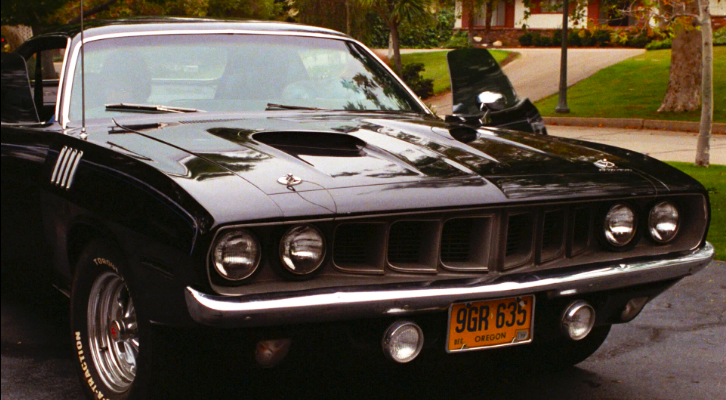
Phantasm (1979)1971 Plymouth 'Cuda · 340 4-speed · 440-6 hood · Cragar S/S wheels · Custom sunroof · Flared rear fenders

Origin

Don Coscarelli had been enamoured with Cudas since his high school days, when a classmate drove a 1970 Plymouth AAR 'Cuda — Sassy Grass Green with white interior, blacked-out fiberglass hood, pistol-grip shifter. When it came time to cast the car for Phantasm, the choice was a no-brainer. Back in the day the price of those cars was dropping because the price of gas was going up and insurance costs were too high. The production bought it off a kid in Los Angeles who wanted to get rid of it.

The Car Itself

There was only one car used in the first film — a tired 340 4-speed car prettied up for the movie and given a 440 6-barrel bulge hood. In the opening scene you can see the 440-6 designation on the hood, indicating a 440 with a "six barrel" (3 two-barrel carburetors). Rumor and eyewitness accounts recall the car being an original FC7 In-Violet with white interior, making it 1 of 1,141 produced in 1971. Don had the rear fenders flared to give a wider, more potent appeal. A friend with a sunroof business added an oversized custom sunroof. Cragar S/S wheels — the favorite aftermarket wheel of the day — were fitted. Bill Thornbury then took the car to his brother's body shop and had it custom gold leaf striped down the sides so it felt like it was really Jody's car. Truth is, underneath the fresh black paint the car was pretty ragged out and gave the crew a lot of problems during filming. A. Michael Baldwin actually learned to drive in that car — he was only 13 at the time.
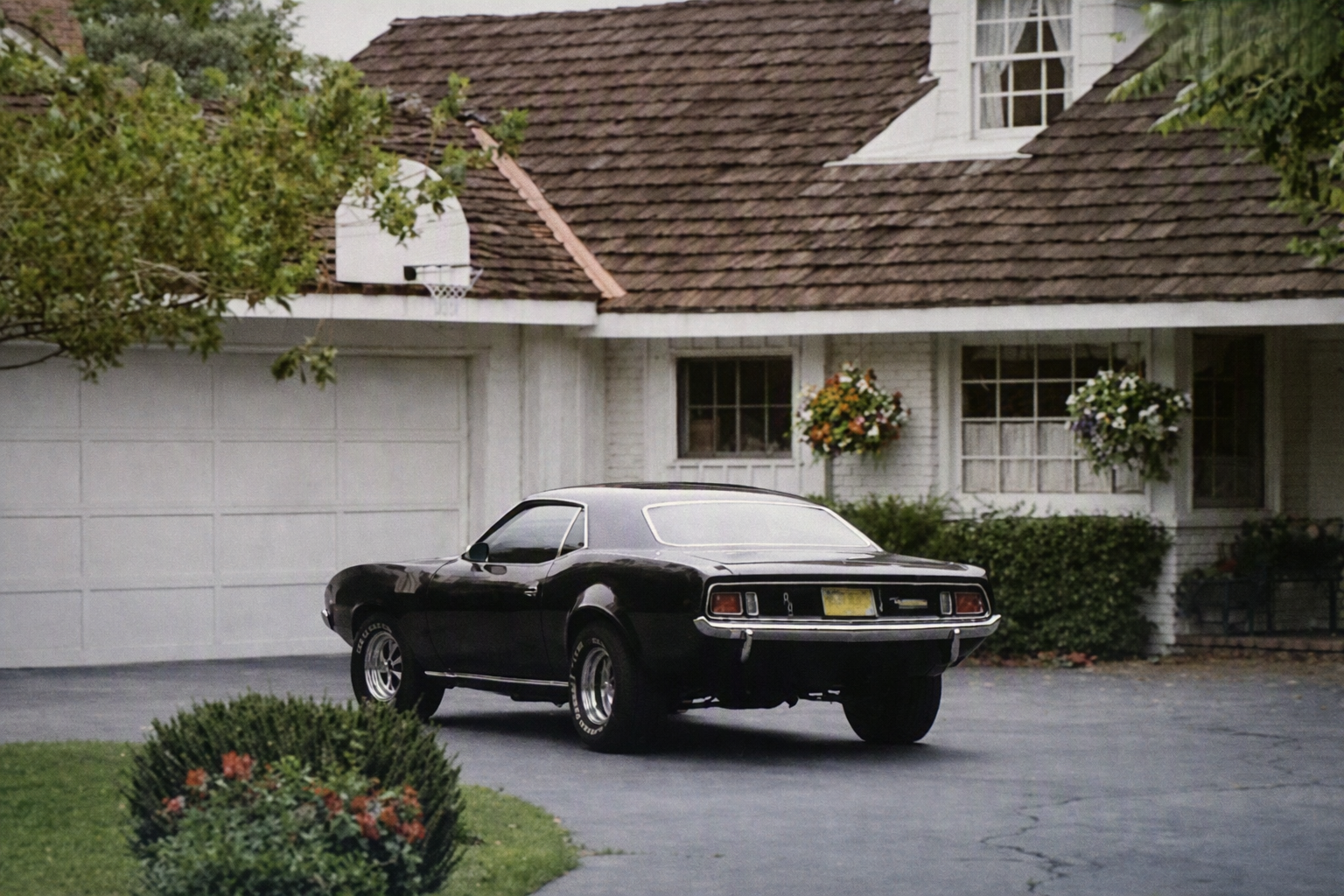
The original black 1971 Phantasm Cuda parked in a residential driveway
The original Phantasm Cuda photographed in a residential driveway.

Notorious Sunroof

When director Don Coscarelli needed a sunroof put into the Phantasm 'Cuda in 1978, the crew took the car to this local San Fernando Valley shop. Because the shop specialized in Datsun 240Zs, they used the exact same "Hatch Cover" kit they had in stock, creating one of the most recognizable visual modifications in horror-car history. Note: Because this installation took place nearly 50 years ago, the original shop has long since closed down, and the vintage "Hatch Cover" company went out of business when the pop-up sunroof craze died out in the late 1980s. Today, classic Datsun and Phantasm replica builders have to scour swap meets and eBay to find original New Old Stock (NOS) Hatch Cover kits.
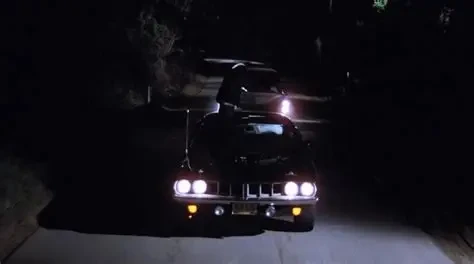
The original Phantasm 1971 Cuda driving at night with its distinctive sunroof
The original Phantasm Cuda with its distinctive Hatch Cover sunroof.

After Filming

After filming wrapped, Art Director David Brown took the car home where it sat in his driveway until he got tired of looking at it. He sold it to real estate broker and car enthusiast James Baker for $2,500. The car has never been heard from or seen again. Despite the efforts of well-connected Mopar enthusiasts — and even Don Coscarelli himself — the whereabouts of this movie and automobile icon have never resurfaced.
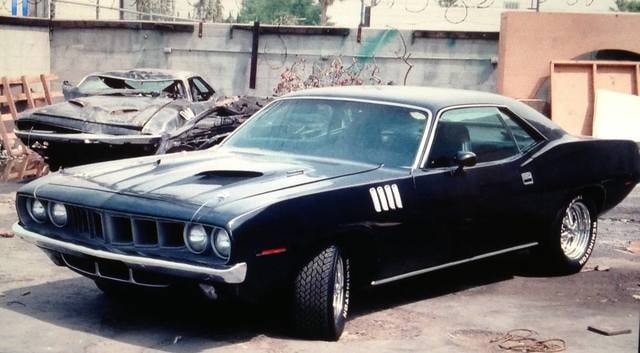
Whereabouts: Under active research
VEHICLE 02

The Phantasm II Stunt Builds

Phantasm II (1988)Three 1971 Barracuda-to-'Cuda conversions · 318 V8 · Rallye hood · HemiCuda emblems · Hurst Pistol Grip

The Search

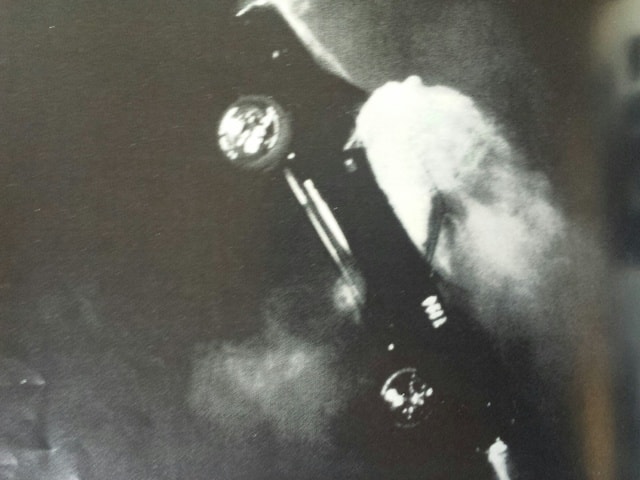
When Coscarelli decided to film a sequel, he knew the original type of car would have to be used. Since the original had been sold to James Baker for $2,500, a new search was implemented. But after two months, all they could turn up was a disfigured '71 Barracuda. One car does not make a movie — at least four 'Cudas would be needed for the various stunts and close-ups. The crew was introduced to Jim Capece through a Barracuda owner, a member of the Barracuda/Cuda Owners Club. With only 19 days until production was scheduled to start and a budget of only $8,000 to locate and purchase four 1971 'Cudas, Jim explained that the value of 'Cudas had changed significantly since the original film. The available budget wouldn't be nearly enough.

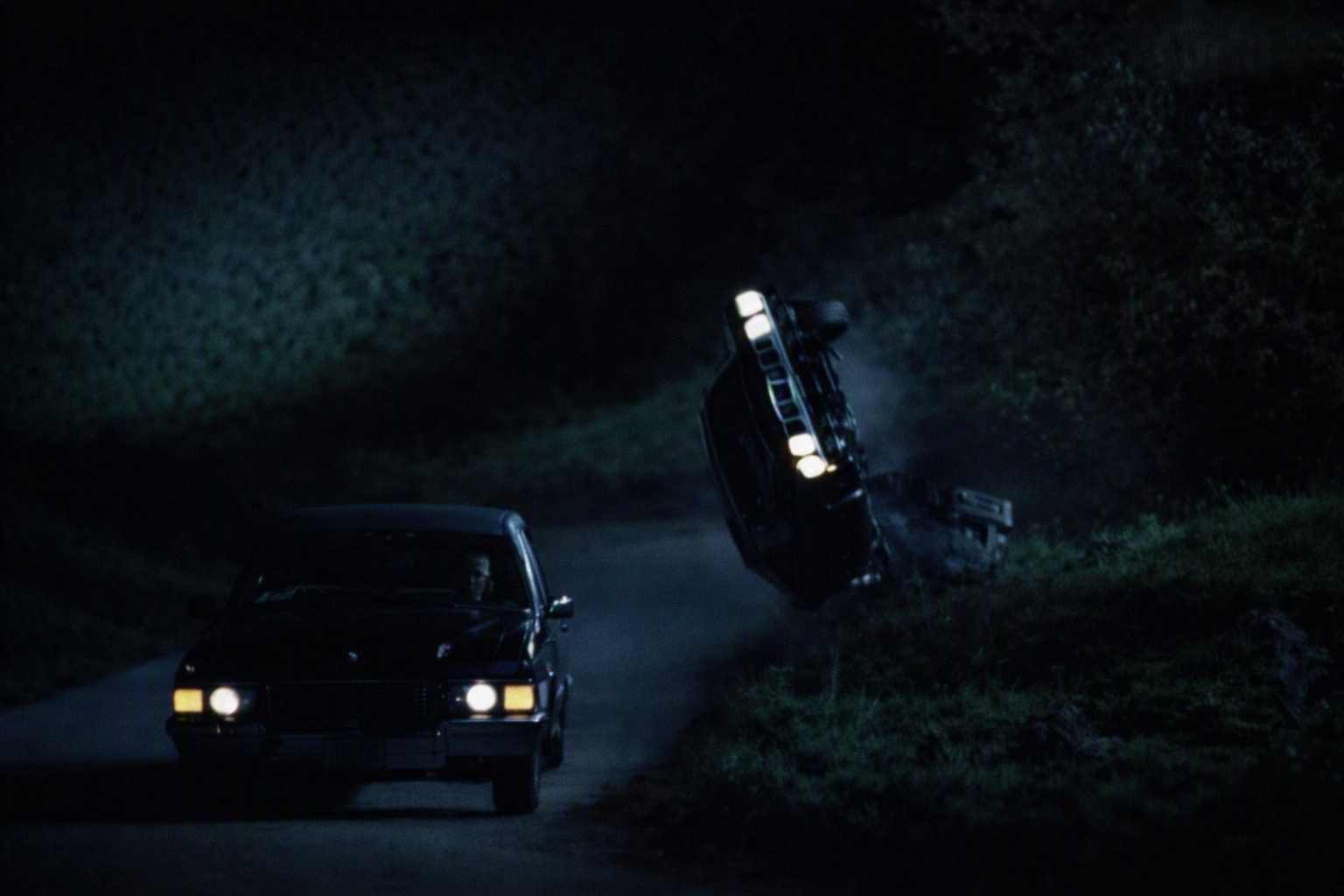
Phantasm II nighttime stunt scene — the Cuda flipping on a dark road
Phantasm II nighttime stunt — the Cuda airborne on a dark road.

Jim Capece's Solution

Jim came up with a brilliant solution: purchase four Barracudas (non-performance models) and turn them into replicas. Within five days, three Barracudas were in Jim's hands for less than the $8,000 budgeted — none of them advertised for sale. With only 11 days left, it was decided the cars wouldn't sport the classic '70s rear quarter fender flares or custom sunroof of the original. The feature car used for close-up scenes was a 318 V8 with Rallye hood, in near perfect condition with only the bumpers and grille missing — purchased for $1,220 from a frustrated owner who was tired of trying to locate a grille. A second 318-powered car was purchased for $650 for stunts. The blowup car was originally a baby blue 318 Barracuda.

Black-and-white behind-the-scenes Phantasm II Cuda stunt photograph
Behind-the-scenes Phantasm II stunt photograph.

The Conversion

Jim went shopping for the parts needed to turn the Barracudas into 'Cudas: one front grille, one Rallye hood, one set of bumpers, two sets of '71 gilled fenders for the stunt cars, and the remainder of the necessary 'Cuda trim. Finding a body shop willing to take the job on a two-week deadline turned into a nightmare. He finally found one, but with only two days left before filming, the cars were removed — the work wasn't progressing fast enough. A stunt mechanic and Jim finished the conversion and tuned up the cars just in time. Unit publicist Kristen Deem recalled: "I remember Jim pulling up in an olive Barracuda and telling me it would soon be revamped into the film's black 'Cuda. In thanks for getting hired, he took me for a spin around the block — so cool."

On Set & After

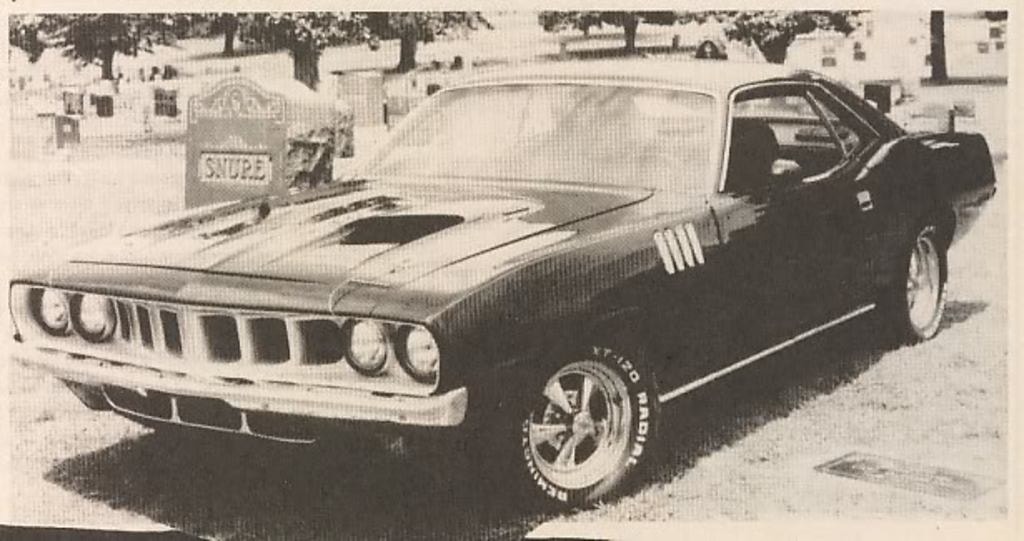
The camera flashes on the bulge sport hood featuring HemiCuda emblems — as the original Phantasm film Cuda had 440-6 'Cuda emblems. The minor detail Jim forgot: HemiCudas only came with a Shaker Hood. But given the schedule these cars were completed in, all is forgiven. What Jim Capece pulled off was nothing short of a miracle. Both stunt cars were totalled during filming. Don kept the remaining close-up car and still owns it to this day — it sits in his garage next to his 1970 HemiCuda clone convertible.

Vintage black-and-white photograph of the Phantasm II movie Cuda
The Phantasm II movie Cuda.
Close-up car: retained by Don Coscarelli · Stunt cars: destroyed during filming
VEHICLE 03

The HemiCuda Convertible

Phantasm III: Lord of the Dead (1994) · Phantasm IV: Oblivion (1998)1970 Plymouth HemiCuda clone convertible · 426 Hemi · TX9 triple black · Shaker hood · Go-wing · White hockey stick stripe

Finding the Car

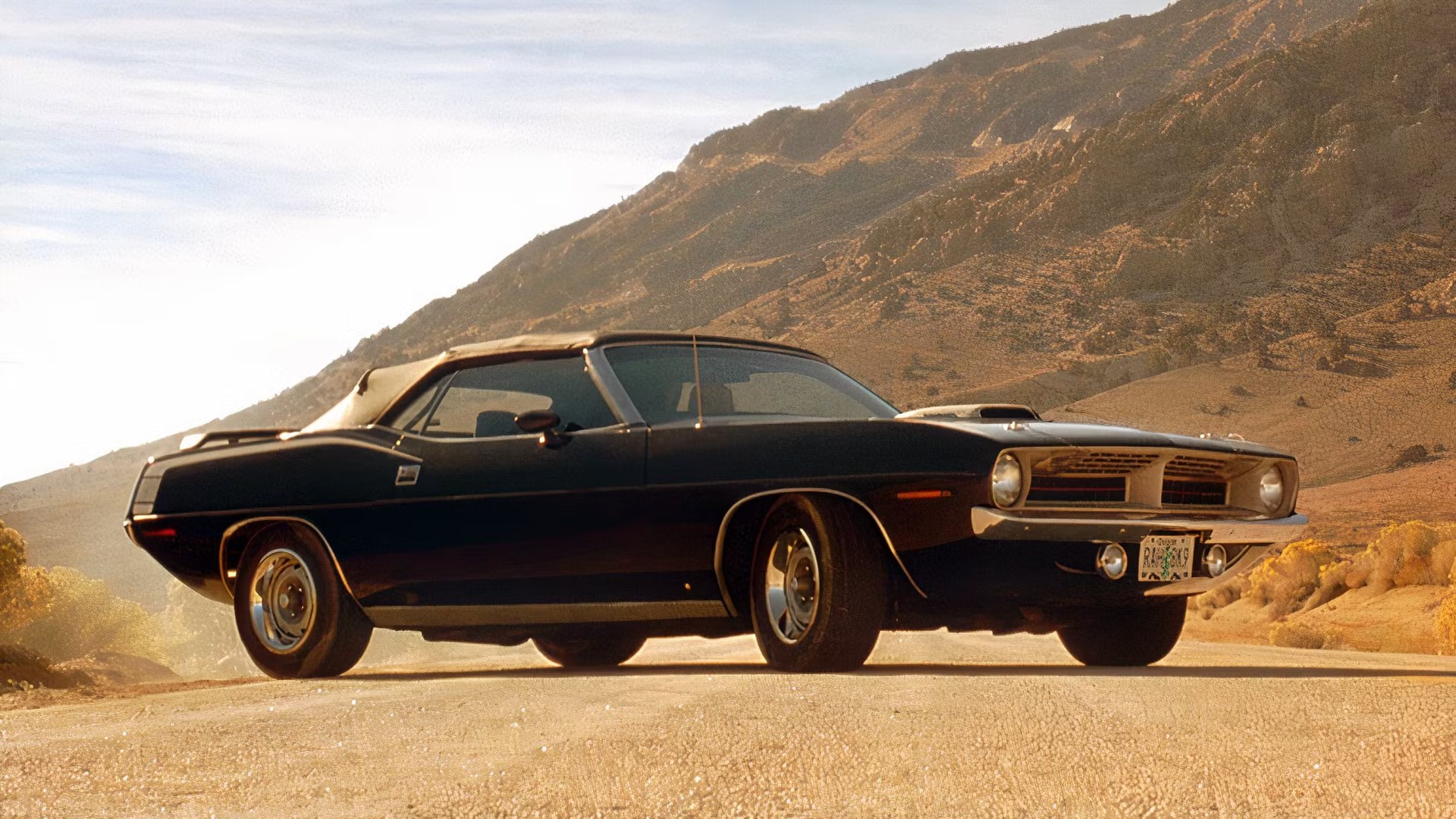
For Phantasm III, Coscarelli was determined to have the best and most correct Cuda of the lot. He had looked at three or four cars in southern California which weren't usable due to the time it would take to restore them. Then by pure luck he stumbled across a 1970 triple black convertible in San Diego. He couldn't have hoped to find a more perfect example. The car had started life as a 318-powered Gran Coupe Barracuda convertible, but the previous owner had already made the costly modifications into a HemiCuda clone: a Hemi K-member and a good running 426 Hemi in place of the 318 small block, a Shaker Hood and go-wing, TX9 triple black paint, and the white hockey stick stripe. Don purchased it on the spot.

Preparation

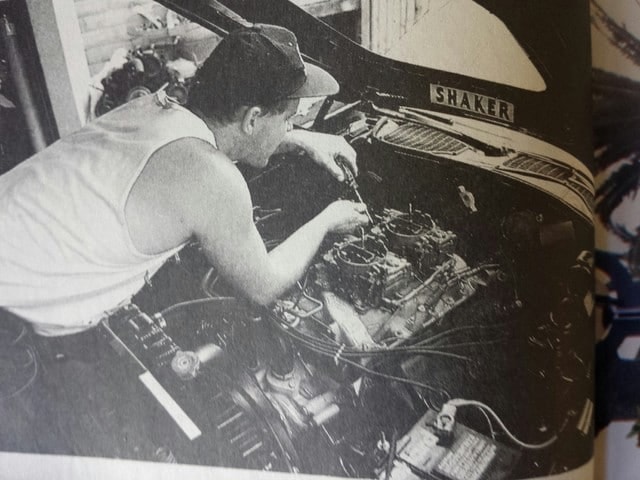
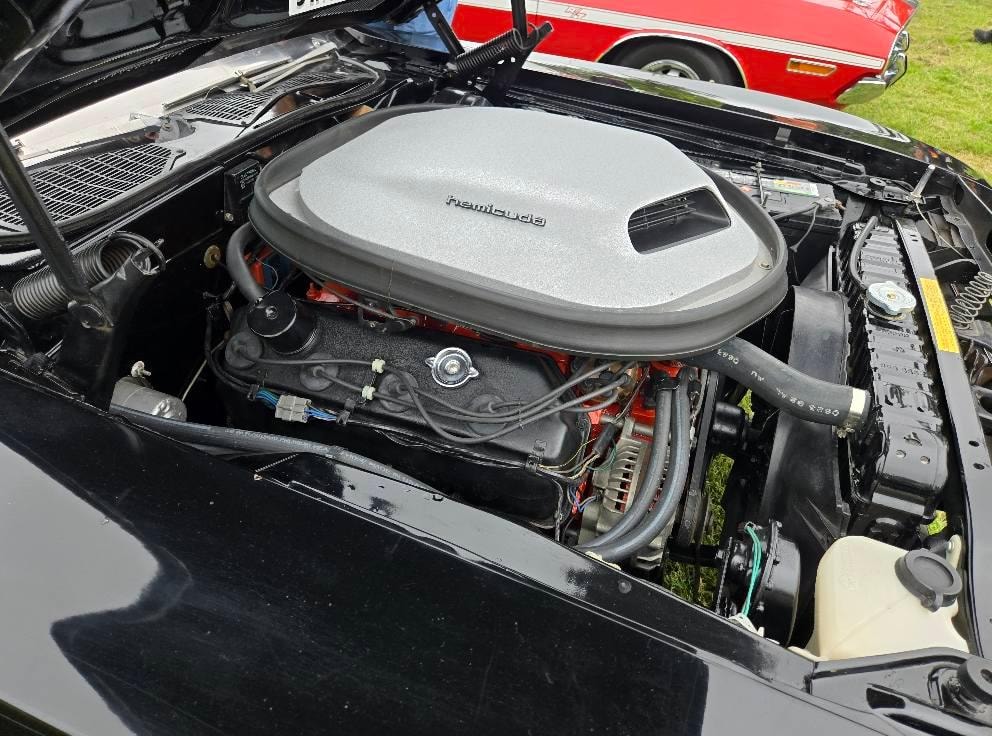
Don rushed the car to his mechanic and restoration expert Greg Buhlinger, well known in the area for his prowess with Mopars. They removed the massive 426 Hemi for cleaning and fitted a stock set of classic wrinkle Hemi valve covers to preserve the classic under-hood appearance while detailing the entire engine bay for the big screen. The Shaker bubble was a cheap reproduction that didn't fit right — a proper replacement was located and quickly sprayed Argent Silver. Co-producer Seth Blair contacted Kevin King of Year One, Inc., who signed on to provide the correct restoration parts. With that completed, a new star was born.

Greg Buhlinger working on the 426 Hemi engine of the Phantasm HemiCuda convertible
Greg Buhlinger preparing the Phantasm HemiCuda convertible.

The Hearse Stunt

The grand finale of the chase sequence called for the Cuda to scream past camera while the hearse lost control and caromed off the road into the air. Stunt driver Bob Ivy — a longtime Phantasm fan — had volunteered for the pipe ramp jump and promised to make it the best of a large vehicle ever. As Coscarelli called action, he realized Bob's foot was to the floor and the hearse was approaching the ramp in excess of seventy miles per hour. On impact, the hearse's solid steel frame torqued in a shower of sparks as the 6,000-pound vehicle was hurled skyward. The Cuda roared past as the hearse — thirty feet above it — sailed through the air. The hearse crashed to earth, missing the rear chrome bumper of the Cuda by inches. By later measurement, the hearse had flown 186 feet. Bob was pulled unconscious from the wreckage, taken to hospital, and pronounced in fine shape.

The Engine Failure

Unlike Phantasm II, this was the only 'Cuda used in filming Phantasm III & IV — no backup cars, no stunt spares. About midway through production, the 426 let go. The car was not being thrashed and was not even on camera — it was simply being driven from one location to another when a valve retainer let go and dropped a valve into a cylinder. The meeting of valve and piston did not go well. Since there was no backup car, repairs had to be made immediately. The engine was yanked and Greg teamed up with the gang at Dick Landy Industries to fix the damaged 426 Hemi. A new head was installed and the damaged cylinder expertly patched. In only one week, the car was back on set running better than ever.

The 426 Hemi engine of the Phantasm III HemiCuda convertible with Shaker bubble and Argent Silver finish
The 426 Hemi engine bay of the Phantasm III HemiCuda convertible.

Current Status

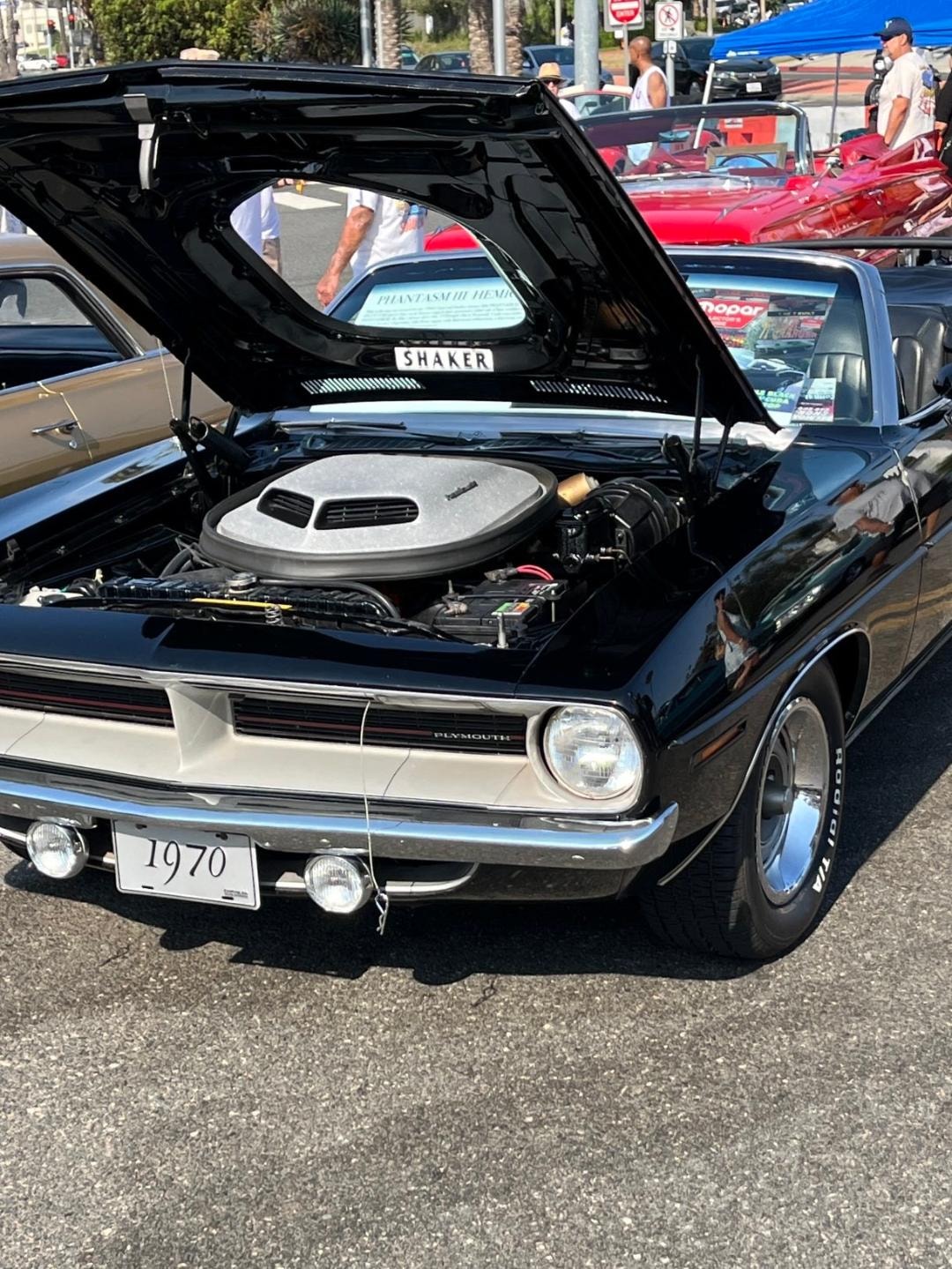
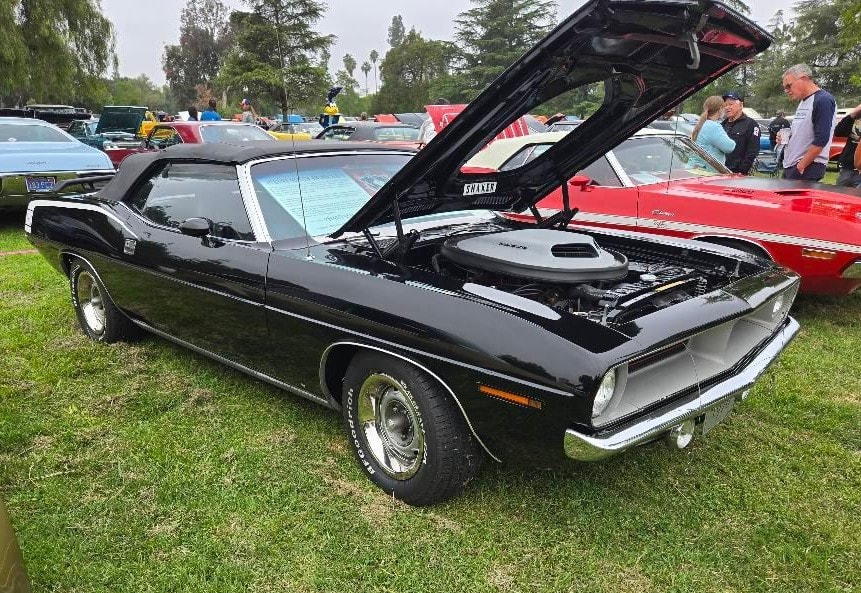
No further mishaps befell the HemiCuda during filming. The convertible now rests peacefully alongside Don Coscarelli's other Mopars in his garage. Don drives his cars every chance he gets, and it still delivers unusual dependability for a 426-powered E-body.

The black 1970 Phantasm HemiCuda convertible displayed with its hood open at a car show
The Phantasm HemiCuda convertible at a car show.
Black Phantasm HemiCuda convertible displayed with its hood open at Woodley Park
The Phantasm HemiCuda convertible at Woodley Park.
Retained by Don Coscarelli · Currently in his personal collection
VEHICLE 04

The Battle‑Cuda of Ravager

Phantasm: Ravager (2016)1971 Plymouth 'Cuda · Modified · Battle-prepared

Origin: The Phantasm II Cuda

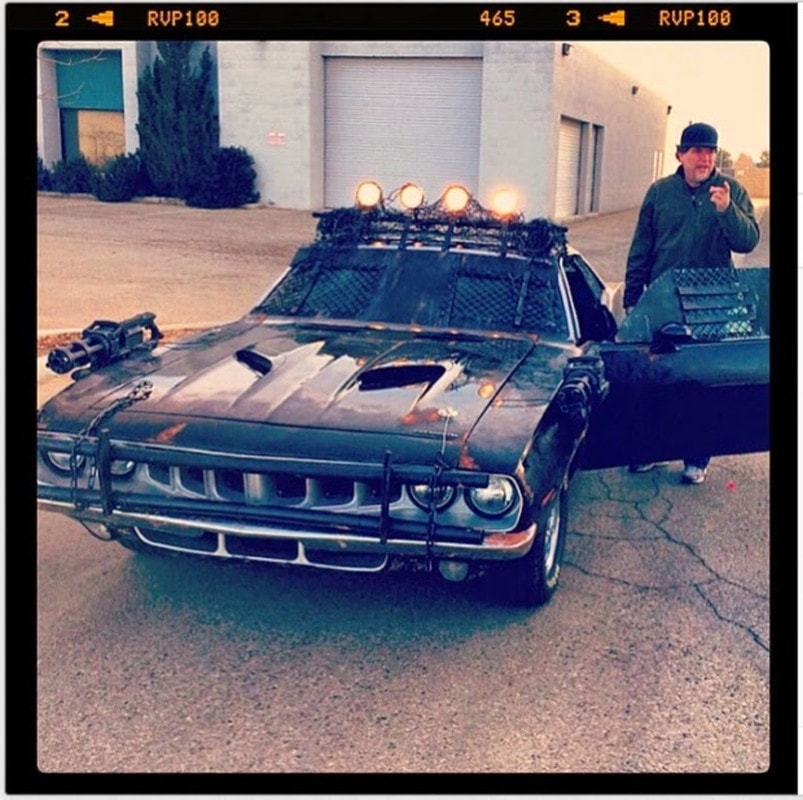
The Battle-Cuda did not begin life as a purpose-built Ravager vehicle. The Phantasm II close-up Cuda — the survivor of Jim Capece's three-car build, retained by Don Coscarelli after filming — served as the foundation for its transformation into the Battle-Cuda. That car, which had carried the franchise through 1988, was modified and battle-prepared for the final chapter of the series.

The Final Chapter

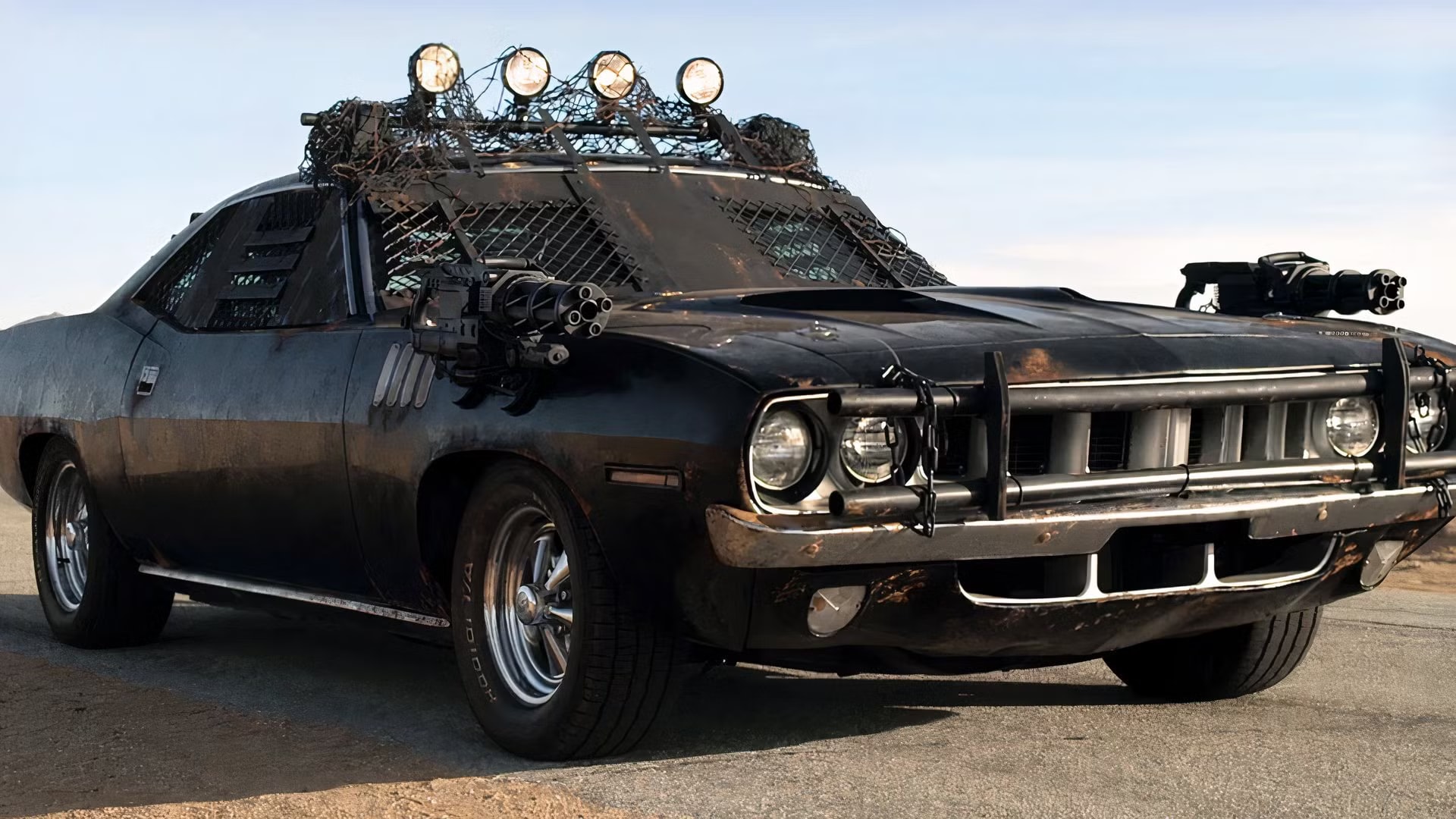
Phantasm: Ravager's guerrilla production, shot over several years by director David Hartman with Coscarelli producing, required a vehicle that could carry the full visual weight of the franchise's conclusion. The Battle‑Cuda appears throughout the film in various states of modification, its condition reflecting the apocalyptic narrative. This was the last Cuda to appear on screen in the Phantasm universe. Documentation of this vehicle is an ongoing part of the archive's work.

The Ravager battle Cuda with roof-mounted lights and protective equipment
The Ravager battle Cuda during production.

Current Status

As the final series vehicle, the Battle-Cuda resides with Don Coscarelli — the last of the Phantasm Cudas to remain in the hands of the man who brought the franchise to life. It stands as the bookend to a lineage that began with a tired 340 four-speed bought off a kid in Los Angeles for a low-budget horror film in 1977.

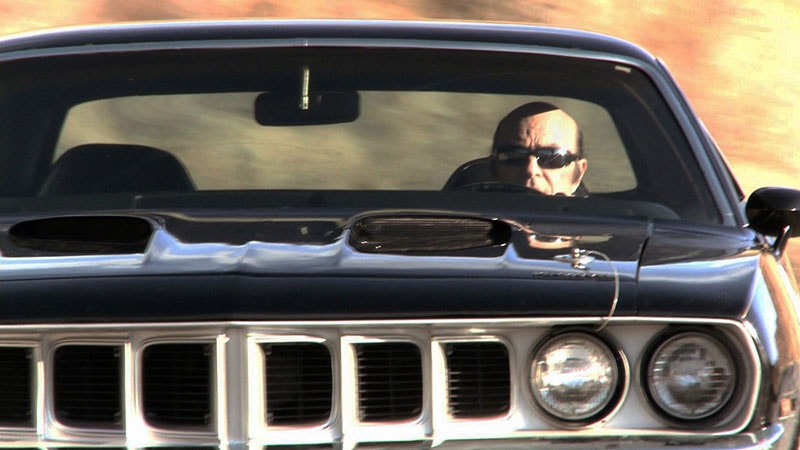
Don Coscarelli behind the wheel of the Battle-Cuda during Phantasm: Ravager production
Don Coscarelli behind the wheel of the Battle-Cuda — Phantasm: Ravager.
Final series vehicle · Resides with Don Coscarelli
Research Status
Research Status

Vehicle documentation is the core work of this archive. Records for the Phantasm productions are scattered — Coscarelli's independent shoots did not generate the studio paperwork that survives in institutional archives. Much of what is known comes from interviews, production photography, and the memories of the people who were there. If you have documentation, photographs, registration records, or firsthand knowledge of any of these vehicles — particularly the whereabouts of the original 1971 movie car — please reach out.

Archive Supplement

The Cuda Scrolls

Unearthed Lore

© 2026 PhantasmCudas.com — Curated by Don Almeido

A long-term research archive. All rights reserved.

Legal Disclaimer

PhantasmCudas.com is an independent, fan‑curated archival project dedicated to documenting the history, construction, and on‑screen use of the vehicles featured in the Phantasm film series. This website is non‑commercial and is provided solely for educational, historical, and enthusiast research purposes.

PhantasmCudas.com is not affiliated with, endorsed by, or associated with Don Coscarelli, Phantasm.com, Coscarelli Productions, any cast or crew members, or any official Phantasm franchise entities. All film titles, character names, trademarks, logos, and copyrighted materials referenced on this site remain the exclusive property of their respective copyright holders.

No portion of this website is intended to imply official status, ownership, authorization, or representation of the Phantasm franchise. All references to the films, vehicles, production details, and related imagery are presented under fair‑use principles for commentary, documentation, and historical preservation.

PhantasmCudas.com does not sell products, merchandise, or services, and does not generate revenue. All content is provided as a free informational resource for fans, researchers, and film‑car historians.

If any copyright holder, representative, or affiliated party has concerns regarding specific content, they may request clarification or removal, and such requests will be honored promptly and respectfully.

Legal Notice

PhantasmCudas.com is an independent, non‑commercial archival project curated by Don Almeido. It exists solely for educational and historical documentation of the Phantasm film vehicles. All film titles, imagery, and trademarks remain the property of their respective copyright holders and are used under fair‑use provisions for commentary and preservation.

Fair‑Use Media Clause

Any film clips, magazine scans, or promotional materials displayed on PhantasmCudas.com are presented strictly for educational commentary and historical documentation under the fair‑use provisions of U.S. copyright law (17 U.S.C. § 107). No commercial use or redistribution is intended.

Submitted materials are used solely for research and archival purposes.